


Last Updated: November 2, 2026
Quick Summary
To prevent fading, wash personalized apparel inside out on a cold, gentle cycle with a mild liquid detergent, and skip bleach and fabric softener. Air-dry inside out in the shade rather than using high dryer heat, which cracks ink and speeds colour loss.
- Turn the garment inside out before it goes in the basket, not at the machine.
- Use a gentle or delicate cycle with a low spin speed to avoid stretching the print.
- Skip fabric softener, which coats the print and can dull colour over time.
- Line dry inside out in shade, since ultraviolet light can break down ink pigments.
- Wash embroidered items inside out on a gentle cycle, using a mesh laundry bag if you have one.
Table of Contents
- Why Personalized Apparel Fades (and How to Prevent It)
- How to Wash Printed Shirts: Step-by-Step
- Best Detergent for Printed Clothes
- How to Dry Printed Shirts Without Cracking
- Washing Embroidered Clothing: What's Different
- Pre-Wash and Stain Treatment for Printed Garments
- Troubleshooting Fading, Cracking and Colour Transfer
- Care Label Exceptions and Manufacturer Instructions
- Shop Personalized Apparel That's Built to Last
- Frequently Asked Questions
Why Personalized Apparel Fades (and How to Prevent It)
The print on a personalised shirt rarely dies from one bad wash. It dies from a hundred small ones: hot water, harsh detergent, and a tumble dryer doing its slow work. Learning how to wash personalized apparel to prevent fading is mostly about removing three things, heat, agitation and strong chemicals.
Here is the short version. Fading is the gradual loss of ink colour or fabric dye, usually caused by heat, friction and harsh detergent. Cracking and peeling are related but different: they happen when the ink layer dries out or gets stretched.
Most care guides stop at "wash cold, turn inside out." That advice is right, but the details that matter also include which print method you own and what your care label says.
Below, we'll show you the full routine, from sorting to storage. We'll also cover the exceptions, because a screen-printed shirt and an embroidered hoodie don't want the same treatment.
How to Wash Printed Shirts: Step-by-Step
Washing a printed shirt safely takes about five minutes of prep and one cycle. The goal is simple: clean the fabric without scrubbing the ink off it. Follow these steps in order to reduce the most common causes of damage.
- Check the care label first. It overrides everything in this guide.
- Empty pockets and close zips or buttons so nothing snags the print.
- Turn the garment inside out. This is a useful habit.
- Sort by colour. Dark prints go with darks, whites with whites.
- Choose a cold, gentle cycle and a mild detergent.
- Skip fabric softener and bleach entirely.
- Air-dry or tumble on low heat if you must use the dryer.
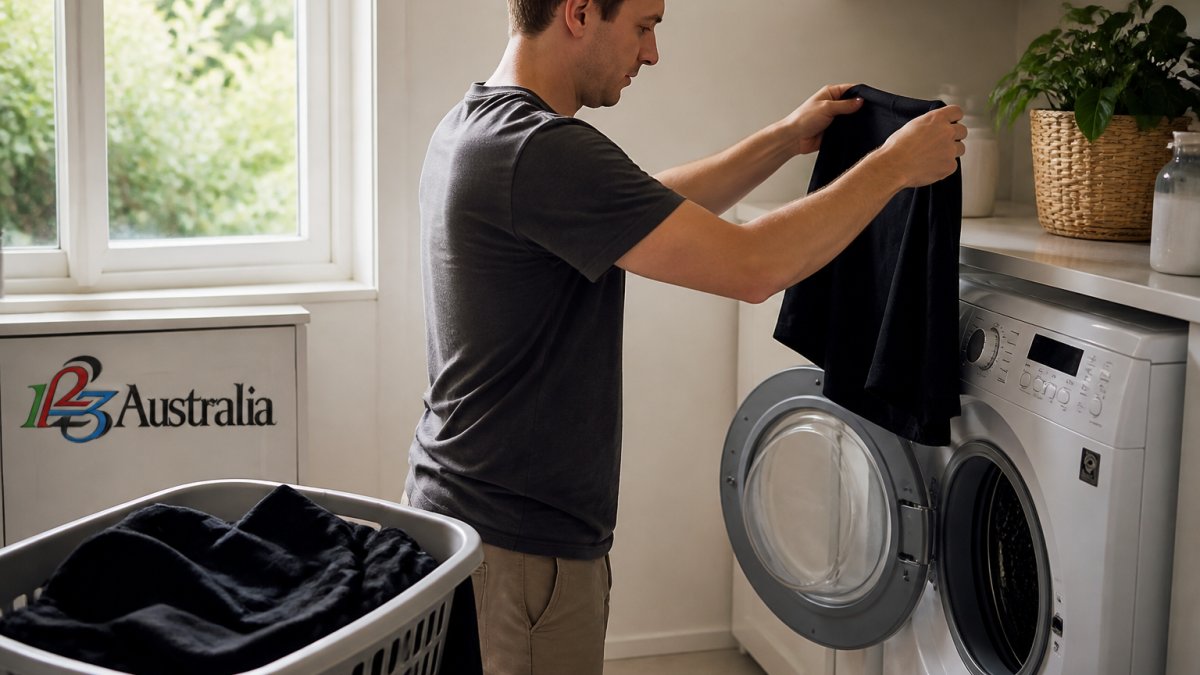
Turn the Garment Inside Out
Turning a printed garment inside out protects the design from the drum. The print faces inward, so it rubs against fabric instead of the machine's walls and other clothes.
This step reduces abrasion on the print. It also helps protect embroidered apparel, where loose threads can catch on zips and buttons.
Do it before the shirt goes in the basket, not at the machine. That way it's already protected when it hits the wash.
Choose the Right Cycle and Temperature
Cold water is a sensible default. Heat can set ink, shrink cotton and speed up colour loss, so keep the wash cool and the cycle short.
Use a gentle or delicate cycle with a low spin speed. High spin speeds press the print against the drum and stretch the fabric, which is how cracks start.
A common mistake is running a "quick wash" at high temperature to save time. That combination, hot and fast, is the worst of both worlds for a printed garment.
Best Detergent for Printed Clothes
A mild, liquid detergent with no bleach and no brighteners is a good choice for printed clothes. Liquids dissolve more easily in cold water than powders, which can leave grit that rubs against the print.
Here's what to look for and what to avoid:
- Choose: mild liquid detergent, free from bleach and optical brighteners
- Avoid: bleach, stain removers with chlorine, and harsh powder detergent
- Skip: fabric softener, which coats the print and can dull colour
- Use less: about half the recommended dose for a small load
Fabric softener deserves a special mention. It leaves a film on fabric that can trap dirt and reduce ink adhesion over time. For printed shirts, skip it.
How to Dry Printed Shirts Without Cracking
Air-drying is a gentle way to dry a printed shirt, and it costs nothing. Heat from a dryer can make printed films less flexible over repeated cycles, which may lead to cracking along fold lines.
Hang the garment inside out on a line or a wide hanger, away from direct sun, and let it dry naturally. Direct sun is not just a heat problem; ultraviolet light can break down ink pigments and fabric dye, so a shirt left on a sunny line for hours may fade faster than one dried in shade.
- Best: line dry inside out, in shade, with good airflow
- Good: tumble dry on the lowest heat setting, short cycle, remove while slightly damp
- Avoid: high heat, drying on a radiator or heater, or leaving prints in direct sun for hours
If you must use the dryer, sort by fabric weight first. Heavy cotton fleece holds heat longer than a lightweight tee, so a mixed load forces you to over-dry the light items to get the heavy ones dry. Dry prints separately from towels, which shed lint that can lodge in the ink film.
Watch out: hanging a wet shirt by the shoulders on a thin wire can leave stretch marks in the fabric and distort the neckline. Use a wide hanger or lay the garment flat on a drying rack.
Ironing and Storage After Drying
Ironing is where many people undo a careful wash. Avoid ironing directly over a print. Turn the garment inside out and iron the reverse side, or place a thin cotton cloth or baking paper between the iron and the design. Use a low heat setting that removes creases, and keep the iron moving. A stationary iron on a print can soften the ink and leave a shiny patch.
For embroidery, iron on the reverse only, and never press the front of a dense stitch block flat, because it crushes the raised texture that makes the embroidery look sharp.
Your Name V2 Surname Thing - Mens Funny Novelty T-Shirt Tshirts BLACK T Shirt →
Storage matters as much as drying. Fold printed garments rather than hanging them for long periods, because hangers stretch the shoulders and the print can crease along the fold. Store in a cool, dry place away from direct light. Avoid sealing prints in plastic bags for long periods. A breathable cotton bag or a closed drawer is better.
A common pattern is that fading blamed on washing is actually sun fade from storage near a window. If a shirt lives on an open rail in a bright room, rotate it or move it into a cupboard.
Washing Embroidered Clothing: What's Different
Embroidered clothing is more forgiving than printed apparel in one way and less in another. The threads don't crack like ink, but they can snag, fray or pull if they catch on something in the wash.
Wash embroidered items inside out on a gentle cycle, and use a mesh laundry bag if you have one. The bag keeps loose threads away from zips, hooks and the drum.
Avoid the dryer for heavy embroidery. The heat and tumbling can distort the stitching and pucker the fabric around it. Air-dry flat instead.
Pre-Wash and Stain Treatment for Printed Garments
Treat stains before the wash, not during it, and always from the inside of the fabric out. Working from the back pushes the stain away from the print instead of through it.
Here's a simple pre-wash routine:
- Blot, don't rub. Rubbing spreads the stain and roughens the print.
- Use cold water first. Hot water can set a stain permanently.
- Apply a mild detergent directly and let it sit for a few minutes.
- Rinse before washing so you can check the stain is gone.
Never scrub a stain with a stiff brush over the print. You'll lift the ink before the stain comes out.
Troubleshooting Fading, Cracking and Colour Transfer
Some damage can be slowed, and some can't. Here's how to tell what you're dealing with and what to do about it.
| Problem | Likely cause | What to do |
|---|---|---|
| Faded colour | Hot water, harsh detergent, sun | Switch to cold washes and shade drying |
| Cracking ink | High dryer heat, stretching | Air-dry and avoid over-stretching |
| Peeling print | Heat and abrasion over time | Wash inside out, low heat only |
| Colour transfer | Mixed loads, hot water | Sort colours and wash cold |
| Stiff print | Fabric softener build-up | Skip softener, rewash gently |
Once ink has cracked or peeled, it won't fully recover. You can slow further damage, but prevention is the only real fix. If you also own custom printed mugs, our guide on whether custom printed mugs are dishwasher safe covers the drinkware side of print care.
Care Label Exceptions and Manufacturer Instructions
The care label should be followed. This guide gives you a general default, but individual garments can carry stricter instructions, and you should follow them.
The decoration method can matter as much as the fabric. A single routine does not suit every print, and the label on a personalised garment can indicate which method was used.
- Screen printing: thick plastisol ink sits on top of the fabric. It is durable but cracks under heat and repeated stretching, so cold washes and air-drying matter most.
- Heat-transfer vinyl: a vinyl film bonded with heat. It peels at the edges when washed hot or tumble-dried, and it should never be ironed directly.
- Direct-to-garment (DTG): water-based ink that soaks into the fibres. It fades gradually with harsh detergent and hot water, and it benefits most from a mild liquid detergent and a cold, gentle cycle.
- Sublimation: dye that becomes part of the fabric, usually on polyester. It is the most wash-resistant method, but high heat can still dull the colour and distort the garment.
- Embroidery: thread stitched through the fabric. It does not crack, but it snags, frays and puckers, so a mesh bag and flat air-drying are the priorities.
If the label is missing or unreadable, treat the garment as the most delicate method it could plausibly be: cold wash, gentle cycle, mild detergent, air-dry. That routine is safe for every method above, even if it is not the fastest.
Some prints are deliberately distressed for a vintage look. That texture is part of the design, so avoid trying to "fix" it with extra washing. A print that feels slightly stiff when new may soften after a cold wash.
For a practical way to judge the quality of what you own, our 7-point custom apparel quality check walks through what to look for in seams, fabric and print. And if you're worried about ruining a personalised item, it helps to know where you stand, so read the return policy for custom apparel before you wash.
Shop Personalized Apparel That's Built to Last
Good care starts with a good garment. A shirt made from quality materials and printed properly is more likely to hold up well over time than a cheaper alternative. Our men's novelty tees, like the What A Difference A Dave Makes design, are made from 100% ring-spun cotton at 165gsm and are machine washable at a maximum of 40°C. The matching women's fitted version uses a lighter 150gsm knit with tapered side seams. Both carry the same advice on the tag: turn inside out to iron, and don't tumble dry or iron directly over the logo.


The real test of personalised apparel isn't the first wear, it's the twentieth wash. Buy garments with quality materials and clear care instructions, and they can keep their colour and shape for longer.
At 123t Australia, our designs are created in-house. You get a 60-day return policy and free shipping, and our customer rating is 5.0. Get started with 123t Australia and find a funny tee for your next occasion.
Frequently Asked Questions
What water temperature is best for washing custom-printed apparel?
Cold water (30°C or below) is a good choice for printed garments. Hot water breaks down the ink bond and causes colours to fade faster. Check the care label first, but as a rule, use the coldest setting your machine offers. If a garment is heavily soiled, a 30°C gentle cycle is usually enough. Avoid 40°C or higher unless the label specifically allows it, and avoid hot water for screen-printed or heat-transfer designs.
Can you put personalized shirts in the tumble dryer?
It's best to air-dry printed shirts whenever possible. If you must use a tumble dryer, choose the lowest heat setting and remove the garment while it's still slightly damp. High heat softens the ink and causes cracking and peeling over time. Many 123t Australia tees carry a 'do not tumble dry' instruction on the label, so always check first. Hang or lay flat to dry in the shade to protect both the print and the fabric colour.
Which detergent is safest for printed clothing?
A mild, liquid detergent free from bleach and harsh enzymes is a good choice for printed clothes. Powder detergents can leave residue that dulls the print, and biological formulas may gradually break down ink adhesion. Look for a gentle or 'delicate' liquid detergent, use the recommended dose, and avoid fabric softeners, which can coat the print and reduce its lifespan.
How do you remove stains from a printed shirt without damaging the design?
Treat stains from the inside out by placing a clean cloth under the stain and dabbing gently with a mild detergent solution. Never scrub the printed area directly, as this abrades the ink. For oil-based stains, a small amount of dish soap can help. Rinse with cold water and wash as normal on a gentle cycle. Avoid bleach and stain removers containing chlorine, which can strip colour from both the fabric and the print.


