


Table of Contents
- What Are Custom Stubby Holders and Why They Matter
- Material Quality and Durability: What Makes a Stubby Holder Last
- Custom Design Options for Your Stubby Holders
- Stubby Holder Design Tips for Events and Occasions
- Event-Specific Themes: Weddings, Birthdays, and Corporate Branding
- Bulk Custom Stubby Holders: Pricing and Order Options
- Printing Techniques: Full-Colour and Screen Print Explained
- Australian Made Guarantee and Quality Assurance
- Fast Turnaround Times and Last Minute Gift Ideas
- Sizing, Compatibility, and 375ml Can Standards
- Eco-Friendly and Sustainable Stubby Holder Options
- How to Order Custom Stubby Holders: Step-by-Step
- Common Mistakes to Avoid When Designing Stubby Holders
- Conclusion: Getting Your Custom Stubby Holders Right
- Frequently Asked Questions
Last Updated: September 1, 2026
What Are Custom Stubby Holders and Why They Matter
A custom stubby holder is a neoprene drink cooler designed to insulate and protect beverage cans or bottles while displaying personalised designs, text, or branding. Made from 6mm-thick neoprene material, these holders keep drinks cold whilst adding a distinctive visual element to any gathering or event. They've become essential Australian party accessories and corporate gifts because they combine practical function with memorable branding.
The appeal goes beyond keeping your drink cold. Custom stubby holders serve as conversation starters at social events, promotional merchandise for businesses, and thoughtful personalised gifts for birthdays, weddings, and celebrations. At 123t Australia, we've seen firsthand how a well-designed stubby holder can transform a simple beverage into a branded experience. Whether you're hosting a backyard gathering or launching a corporate campaign, custom stubby holders make an impact that generic merchandise simply cannot.
What makes them particularly valuable is their dual purpose: they're functional enough for everyday use, yet distinctive enough to become keepsakes. A guest who receives a custom stubby holder at your wedding or corporate event doesn't just use it once and discard it. They keep it, use it regularly, and show it to others. That's genuine brand exposure and personal connection rolled into one affordable product.
Material Quality and Durability: What Makes a Stubby Holder Last
The foundation of any quality stubby holder is its material composition. Neoprene, the same material used in wetsuits and professional insulation products, is the industry standard because it provides superior insulation, flexibility, and durability. However, not all neoprene is equal, thickness, density, and construction method directly determine how long your holder will perform.
Neoprene Thickness and Insulation Performance
Neoprene thickness is measured in millimetres, and the most common options are 3mm, 5mm, and 6mm. Each thickness level offers measurable trade-offs:
-
3mm neoprene is lightweight and flexible, making it comfortable to grip for extended periods. It provides adequate insulation for casual use, keeping a beverage noticeably cooler than an uninsulated can, but offers less temperature retention in hot conditions. A 3mm holder typically maintains a 5-8°C temperature advantage over an uninsulated can for approximately 2-3 hours in direct sunlight. This thickness is ideal for personal use or small events where holders won't be subjected to intense heat exposure.
-
5mm neoprene strikes a practical middle ground. It provides measurably better insulation than 3mm whilst remaining comfortable to hold. A 5mm holder typically maintains a 7-10°C temperature advantage for 3-4 hours in outdoor conditions. This thickness is popular for corporate gifts and events where durability and performance matter equally.
-
6mm neoprene offers maximum insulation performance. It maintains a 10-12°C temperature advantage for 4-5 hours or longer, depending on ambient temperature and initial beverage temperature. The trade-off is slightly reduced flexibility and a marginally thicker feel in hand. For outdoor events in hot climates, premium corporate applications, or holders intended for long-term regular use, 6mm is the standard choice.
These performance differences are not theoretical, they're measurable and noticeable in real-world use. A guest holding a 6mm holder at a summer barbecue will experience a noticeably colder drink at the 3-hour mark compared to someone with a 3mm holder, directly affecting their perception of quality and value.
Durability Factors Beyond Thickness
Durability depends on three critical factors: material density, stitching construction, and print adhesion.
Material density refers to how tightly the neoprene is compressed. Higher-density neoprene resists compression and maintains its shape after hundreds of uses. Lower-density neoprene gradually compresses, losing both its insulation properties and structural integrity. When evaluating suppliers, ask whether their neoprene is closed-cell (superior) or open-cell (lower quality). Closed-cell neoprene resists water absorption and maintains performance through repeated washing and use.
Stitching quality determines longevity at stress points. The seams where the neoprene is joined and the attachment points for the adjustable strap are where cheap holders fail. Quality construction uses reinforced stitching with thread designed to withstand repeated stretching and flexing. Poor stitching creates weak points where the material separates, rendering the holder useless within months. Inspect sample holders or request close-up photos of stitching before committing to large orders.
Print adhesion is where many suppliers cut corners. A design that fades, cracks, or peels after a few washes defeats the purpose of personalisation. Quality full-colour printing uses inks specifically formulated for neoprene and includes proper curing processes to bond the ink to the material. Screen-printed designs, when executed correctly, actually penetrate slightly into the neoprene surface, creating superior durability compared to surface-level printing. Ask your supplier about their curing process and request information on how their prints perform after 20+ wash cycles.
The Adjustable Strap: A Critical Durability Point
The adjustable strap is where many cheaper holders fail prematurely. A quality strap uses reinforced stitching at attachment points and elastic material that maintains tension after hundreds of uses. The elastic should be tested for:
- Tension retention: Does the strap maintain its grip after 50 uses? After 100? Cheap elastic loses tension quickly, causing the holder to slip on cans and reducing both functionality and visibility of your design.
- Stitching integrity: Are the attachment points reinforced with multiple rows of stitching? Single-line stitching fails when the strap is repeatedly stretched and relaxed.
- Material quality: Premium elastic maintains flexibility and strength; budget elastic becomes brittle and tears.
When selecting a supplier, specifically ask about strap construction and request holders that have been tested for durability. A strap that loosens after a month of use means your carefully designed branding becomes less visible as the holder slips, and the functional benefit disappears.
Real-World Durability Testing
Quality holders are designed to withstand:
- Repeated washing: 20+ wash cycles in warm water without fading, cracking, or material degradation
- UV exposure: Outdoor use across multiple seasons without significant colour fading (darker colours and quality inks resist fading better than light colours)
- Temperature cycling: Repeated transitions from cold beverages to warm storage without material brittleness or loss of flexibility
- Mechanical stress: Hundreds of uses involving stretching the strap, gripping the holder, and removing/replacing cans without seam separation or strap failure
Reputable suppliers can provide durability data or connect you with customers who've used holders for extended periods. A holder that's been in regular use for 2+ years is a strong indicator of quality construction and material selection.
Choosing the Right Thickness for Your Needs
For corporate gifts intended for long-term use and repeated visibility, 6mm neoprene with reinforced stitching and quality printing represents the best investment. For personal events or situations where holders will be used occasionally, 5mm offers excellent value. Budget-conscious bulk orders might use 3mm, but this choice sacrifices both insulation performance and perceived quality.
The cost difference between thicknesses is typically modest, often 10-20% per unit between 3mm and 6mm, but the performance and longevity difference is substantial. When calculating true value, consider how many times each holder will be used and how long you want it to remain functional and visually appealing.
Custom Design Options for Your Stubby Holders
The design possibilities for custom stubby holders are extensive, limited primarily by your imagination and the printing technique you choose. You can feature a single bold graphic, incorporate multiple colours, add text or names, include photographic images, or combine all of these elements. Most suppliers, including 123t Australia, offer full-colour printing that captures intricate details and vibrant hues.
The design wraps around the holder, so you're working with a cylindrical canvas rather than a flat surface. This means your design needs to look compelling from multiple angles. A design that looks great head-on might feel unbalanced when viewed from the side. The best custom stubby holder designs account for this cylindrical format, using wraparound patterns or central focal points that work in three dimensions.
Text placement requires careful consideration. Names, dates, or short slogans should be positioned where they're immediately visible and readable at arm's length. Avoid placing critical text too close to the edges where it might wrap awkwardly or become difficult to read. Font size matters more than you'd expect, what looks readable on a computer screen can become illegible when printed at actual size on a curved surface.
Colour selection directly impacts visual impact and longevity. Darker colours and jewel tones tend to look richer and show less wear over time. Lighter colours can appear washed out if the print quality isn't exceptional, and they show staining more readily. When designing for bulk orders or corporate branding, consider how your chosen colours will photograph in different lighting conditions, this affects how the holders look in social media posts or event photos.
Stubby Holder Design Tips for Events and Occasions

Successful event-specific designs balance personal significance with visual clarity. For a birthday celebration, incorporating the person's age, a favourite colour, or an inside joke creates emotional resonance. The design should still be readable and attractive to other guests, though, a stubby holder that only makes sense to one person has limited appeal beyond that event.
Consider the event's atmosphere when selecting design elements. A formal corporate function calls for professional branding, clean typography, and restrained colour palettes. A casual backyard gathering can embrace humour, bold graphics, and playful text. Wedding favours benefit from elegant designs that guests will want to keep and display, whereas party favours for a milestone birthday can be more irreverent and fun.
Timing your design decisions matters. If you're ordering custom stubby holders for an event, you need designs finalised well before your required delivery date. Rush orders are possible but cost more and leave less room for design revisions. Starting your design process 6-8 weeks before your event gives you time to request design proofs, make adjustments, and receive your order without stress.
The quantity you order should reflect genuine need plus a small buffer. Ordering too few means some guests miss out; ordering excessive quantities wastes money on items that won't be used. A practical approach is calculating your expected guest count and adding 10-15% for extras. For corporate events, consider ordering slightly more to account for staff members or unexpected attendees.
Event-Specific Themes: Weddings, Birthdays, and Corporate Branding
Wedding favours using custom stubby holders work particularly well because guests appreciate receiving something genuinely useful. A design incorporating the couple's names, wedding date, and a meaningful colour scheme becomes a keepsake guests actually use. Many couples choose elegant designs with metallic accents or subtle patterns that complement their wedding aesthetic. The holders serve as ongoing reminders of the celebration and the couple's relationship.
Birthday celebrations benefit from more playful designs. Age milestones (30th, 40th, 50th) can be featured prominently, alongside the birthday person's name and perhaps a humorous tagline. Themed birthday parties, whether sporting, musical, or activity-based, can incorporate theme-specific graphics that make the holders feel tailored to the celebration. The key is creating designs that guests will genuinely want to keep and use, not just polite party favours that end up discarded.
Corporate branding through custom stubby holders positions your business as thoughtful and practical. Company logos, brand colours, and corporate messaging work well on these holders. They're particularly effective as conference gifts, client appreciation items, or employee recognition rewards. A well-designed corporate stubby holder sits on someone's desk or in their home, providing repeated brand exposure. Unlike disposable promotional items, quality custom holders become part of people's everyday lives.
Team-building events and staff celebrations gain impact when custom stubby holders feature team names, company logos, or event-specific graphics. Employees appreciate receiving useful items they'll actually use, and the holders create a sense of shared identity and team pride. For remote teams or distributed workforces, sending custom branded holders creates tangible connection and reinforces company culture.
Bulk Custom Stubby Holders: Pricing and Order Options
Ordering custom stubby holders in bulk significantly reduces the per-unit cost compared to individual purchases, but understanding pricing structures is essential to calculating true value and comparing suppliers accurately. Bulk pricing is rarely as simple as "lower quantity = higher per-unit cost." Instead, it involves setup fees, tiered pricing, and production minimums that interact in ways that can dramatically affect your total investment.
Understanding Bulk Pricing Structure
Most suppliers use a two-component pricing model:
-
Setup fee: A one-time charge covering design preparation, printing screen creation (for screen printing), and production setup. Setup fees typically range from $50-$150 depending on design complexity and printing technique. This fee is charged once per order, regardless of quantity.
-
Per-unit cost: The cost to produce each individual holder, which decreases as quantity increases due to economies of scale.
Here's a practical example of how these components interact:
- Supplier A quotes: $80 setup fee + $4.50 per unit
- Supplier B quotes: $120 setup fee + $4.00 per unit
At 50 units:
- Supplier A: $80 + (50 × $4.50) = $305 total, or $6.10 per holder
- Supplier B: $120 + (50 × $4.00) = $320 total, or $6.40 per holder
At 200 units:
- Supplier A: $80 + (200 × $4.50) = $980 total, or $4.90 per holder
- Supplier B: $120 + (200 × $4.00) = $920 total, or $4.60 per holder
Supplier B becomes more cost-effective at larger quantities, but Supplier A is cheaper for smaller orders. This is why comparing only per-unit prices is misleading, you must calculate total cost for your specific quantity.
Tiered Pricing Brackets
Most suppliers offer tiered pricing where per-unit costs decrease at specific quantity thresholds:
- 25-49 units: $5.00 per holder
- 50-99 units: $4.50 per holder
- 100-249 units: $4.00 per holder
- 250-499 units: $3.50 per holder
- 500+ units: $3.00 per holder
These brackets create natural decision points. Ordering 49 holders costs significantly more per unit than ordering 50, making the jump to the next tier often worthwhile even if you don't need the extra quantity. Conversely, ordering 250 holders when you only need 100 might not be economical unless you can use or store the extras.
Minimum Order Quantities and How to Navigate Them
Most suppliers set minimum order quantities (MOQs) of 25-50 holders. Some offer lower minimums (as few as 10-15 holders) at premium per-unit pricing. If your event requires only 30 holders but the standard MOQ is 50, you have three options:
-
Order the minimum (50 holders): Accept the extra 20 holders. Consider using them as gifts for staff, keeping them for future events, or distributing them to additional guests.
-
Pay a premium for a lower MOQ: Some suppliers charge 15-30% more per unit to accommodate orders below their standard minimum. For 30 holders, this might cost $150-$200 more than ordering 50 at standard pricing. Calculate whether this premium is worth it for your situation.
-
Split your order across multiple events or purposes: If you're ordering for a wedding, consider ordering 50 holders and using the extras as thank-you gifts for wedding party members, vendors, or future events.
For corporate bulk orders (250+ holders), MOQs are rarely a constraint, and you'll typically access the best per-unit pricing available.
Calculating True Cost and Value
When evaluating bulk pricing, create a simple spreadsheet comparing total cost across your likely quantity range:
| Quantity | Setup Fee | Per-Unit Cost | Total Cost | Cost Per Holder |
|---|---|---|---|---|
| 50 | $80 | $4.50 | $305 | $6.10 |
| 100 | $80 | $4.00 | $480 | $4.80 |
| 200 | $80 | $3.50 | $780 | $3.90 |
| 500 | $80 | $3.00 | $1,580 | $3.16 |
This visual comparison reveals the cost impact of quantity decisions and helps identify the sweet spot for your budget and needs.
Printing Technique Impact on Pricing
The printing method you choose significantly affects bulk pricing:
Full-colour printing typically costs more per unit than screen printing because it requires no setup fee (or a minimal one) but uses more expensive ink and requires individual printing for each holder. Full-colour pricing is often consistent across quantity ranges, with modest per-unit discounts at very high volumes (500+). Full-colour is ideal when you're ordering smaller quantities (under 100) because you avoid large setup fees.
Screen printing involves creating a stencil (screen) for each colour in your design, then pressing ink through each screen onto the holder. This technique works exceptionally well for bold, solid-colour designs with limited colour ranges. Screen printing produces vibrant, durable results that resist fading better than full-colour printing, particularly when exposed to sunlight and outdoor conditions.
Screen printing requires separating your design into individual colour layers, which means it's most cost-effective for designs with 2-4 colours. If your design has 6+ colours, screen printing becomes impractical and expensive. The technique excels at producing clean, sharp edges and bold graphics. Many corporate logos and simple designs are ideal candidates for screen printing.
Choosing the right technique for your quantity:
- Under 100 holders: Full-colour printing usually offers better value
- 100-250 holders: Compare both techniques; screen printing may be competitive for simple designs
- 250+ holders: Screen printing typically delivers superior per-unit pricing for designs with 3-4 colours
Lead Times and Rush Order Premiums
Standard lead times for bulk orders typically range from 2-4 weeks, depending on current production schedules and design complexity. This timeline allows for design proofing, revisions, and production without pressure.
Rush orders compress this timeline but incur premiums:
- 7-10 business day delivery: Typically 20-30% premium on total order cost
- 3-5 business day delivery: Typically 40-60% premium on total order cost
- Next-business-day delivery: Rarely available; typically requires pre-made stock or extremely simple designs
For a $500 order, a 7-10 day rush might cost an additional $100-$150. For a $2,000 order, the same rush might add $400-$600. Planning ahead and ordering with standard lead times eliminates these premiums entirely.
Seasonal Pricing Variations
Bulk pricing can fluctuate seasonally. Peak periods (October-November approaching Christmas, and March-April for winter events in the Southern Hemisphere) often see longer lead times and occasionally higher per-unit costs as suppliers manage capacity constraints. Ordering during off-peak periods (January-February, June-August) sometimes yields slightly better pricing and guaranteed shorter lead times.
Payment Terms for Bulk Orders
Bulk orders typically require staged payment:
- Deposit (usually 50%): Due upon order confirmation to secure your production slot
- Final payment (remaining 50%): Due before shipping
Some suppliers offer alternative terms for established customers or very large orders (500+). Clarify payment terms before committing to an order, as unexpected payment schedules can disrupt budgeting. Confirm whether your supplier accepts bank transfer, credit card, or other payment methods, and whether they charge processing fees for certain payment types.
Comparing Total Cost Across Suppliers
When evaluating multiple suppliers, request detailed quotes that include:
- Setup fees (itemised by component if applicable)
- Per-unit pricing for your specific quantity
- Total order cost
- Lead time
- Payment terms
- What's included (e.g., design proofing, revisions, shipping)
Create a comparison table with all suppliers showing total cost for your quantity. The cheapest per-unit price is meaningless if it comes with a $300 setup fee and a longer lead time. Total cost and timeline are what matter for your decision.
Volume Commitments and Future Orders
If you're planning multiple orders (e.g., annual corporate gifts, recurring events), discuss volume commitments with your supplier. Some offer locked-in per-unit pricing for committed volumes across multiple orders, effectively giving you bulk pricing benefits even if individual orders are smaller. For example, committing to 500 holders annually (delivered in 4 quarterly orders of 125 each) might qualify you for per-unit pricing that would normally require 250+ per order.
Hidden Costs to Clarify
Before finalising your order, confirm whether the quoted price includes:
- Shipping: Is delivery included, or charged separately? Shipping costs for bulk orders can range from $50-$200+ depending on location and carrier.
- Design proofing: Are design revisions included, or charged per revision?
- Packaging: Are holders packaged individually, in bulk, or in custom packaging? Custom packaging adds cost.
- GST: Is the quoted price GST-inclusive or exclusive?
These details significantly affect your true total cost and should be clarified in writing before payment.
Printing Techniques: Full-Colour and Screen Print Explained
Full-colour printing uses advanced printing technology to reproduce photographic images, complex colour gradations, and intricate designs with exceptional detail. This technique works by layering coloured inks to create virtually any colour imaginable. Full-colour printing is ideal when your design includes photographs, detailed artwork, or multiple colours that would be difficult to separate for screen printing.
Full-colour printing produces sharper text and finer details than screen printing, making it the better choice for intricate logos or designs with small typography. The colour accuracy is excellent, and the technique handles colour gradients smoothly. The primary limitation is that full-colour prints on neoprene require proper curing to ensure longevity, and they may show slight fading if exposed to intense UV light over extended periods.
Screen printing involves creating a stencil (screen) for each colour in your design, then pressing ink through each screen onto the holder. This technique works exceptionally well for bold, solid-colour designs with limited colour ranges. Screen printing produces vibrant, durable results that resist fading better than full-colour printing, particularly when exposed to sunlight and outdoor conditions.
Screen printing requires separating your design into individual colour layers, which means it's most cost-effective for designs with 2-4 colours. If your design has 6+ colours, screen printing becomes impractical and expensive. The technique excels at producing clean, sharp edges and bold graphics. Many corporate logos and simple designs are ideal candidates for screen printing.
The choice between full-colour and screen printing depends on your design complexity and durability priorities. A photographic design or intricate artwork demands full-colour printing. A simple logo with 2-3 colours might be better served by screen printing's superior durability and vibrant finish. Most quality suppliers, including 123t Australia, can advise on the best technique for your specific design and recommend the approach that will deliver the best results for your needs.
Australian Made Guarantee and Quality Assurance
When you purchase custom stubby holders from an Australian supplier, you're supporting local manufacturing and ensuring quality standards aligned with local expectations. Australian-made products typically undergo stricter quality controls than imports, and you have recourse through local consumer protection frameworks if issues arise.
Quality assurance in custom stubby holder manufacturing involves multiple checkpoints. Materials are inspected upon receipt to ensure they meet specifications. Printing is tested on sample holders before full production runs commence. Finished holders are inspected for print quality, stitching integrity, and overall construction before shipping. Reputable Australian suppliers maintain these standards consistently because their reputation depends on customer satisfaction.
The 60-day return policy offered by 123t Australia provides genuine protection. If your custom holders arrive and the quality falls short of expectations, you can return them for a refund or replacement. This policy gives you confidence when ordering, knowing you're not locked into a purchase if the product doesn't meet your standards.
Australian consumer protection laws provide additional assurance. The Australian Consumer Law protects you against misleading claims, faulty products, and failure to deliver goods as described. When ordering from an Australian business, you're protected by these legal frameworks, whereas international purchases may offer limited recourse if problems arise.
Checking supplier credentials and customer reviews provides additional confidence. Established Australian businesses typically have customer testimonials, visible social proof, and industry recognition. A supplier that's been operating for years and maintains strong customer ratings has demonstrated reliability through repeated successful transactions.
Fast Turnaround Times and Last Minute Gift Ideas
Last-minute gift situations are common, and custom stubby holders can work as rush gifts when you order from suppliers offering expedited production. Standard lead times might be 2-4 weeks, but many suppliers accommodate rush orders with compressed timelines, sometimes delivering within 7-10 business days for additional fees.
The feasibility of rush orders depends on current production schedules and the complexity of your design. Simple designs with standard printing techniques are easier to rush than complex multi-colour projects. If you need custom holders urgently, contact your supplier immediately to confirm whether they can accommodate your timeline before committing to the order.
Custom stubby holders work particularly well for last-minute gifts because they're thoughtful without requiring extensive lead time planning. A design featuring the recipient's name, a significant date, or a personalised message transforms a simple holder into a meaningful gift. The recipient receives something genuinely useful rather than a generic gift-shop purchase.
For truly urgent situations, some suppliers maintain stock of pre-made holders that can be customised with minimal turnaround. These options limit design flexibility but deliver results within days rather than weeks. This approach works well when you need a gift quickly and can work within the available design templates.
Rush orders typically cost more than standard orders, reflecting the compressed production schedules and priority handling required. Budgeting an additional 20-40% for expedited service is reasonable. Despite the premium cost, rush custom holders often represent better value than last-minute generic gifts, as they demonstrate genuine thought and effort.
Sizing, Compatibility, and 375ml Can Standards
The standard Australian beverage can size is 375ml, and quality custom stubby holders are specifically designed to fit this size perfectly. The adjustable strap accommodates slight variations in can diameter, ensuring a secure fit whether you're using standard tins or bottles of similar dimensions. A properly fitted holder grips the can snugly without being uncomfortably tight.

Compatibility extends beyond just 375ml cans. Most quality stubby holders also accommodate stubby bottles (similar diameter to standard cans) and even some larger bottles depending on strap adjustment. The adjustable strap design is crucial here, it allows users to tighten or loosen the fit based on what they're holding. This versatility makes custom holders genuinely useful across different beverage types and occasions.
Sizing considerations matter when designing. The holder wraps around the can's circumference, so your design needs to account for this wraparound format. A design that looks perfect on a flat mockup might appear distorted or unbalanced when wrapped around the cylindrical shape. Quality suppliers provide design templates that show exactly how your design will appear on the finished holder, preventing surprises.
The height of the holder, typically around 12-13 centimetres, provides adequate coverage for standard cans whilst remaining manageable to hold and store. This sizing is optimised through years of product development to balance insulation effectiveness with practical usability.
Compatibility with different beverage types is a genuine advantage of quality custom holders. Someone might use their holder with a beer at a barbecue, then later use it with a soft drink or water. This versatility increases the likelihood they'll keep and use the holder regularly, providing ongoing visibility for your branding or personal design.
Eco-Friendly and Sustainable Stubby Holder Options
Environmental considerations increasingly influence purchasing decisions, and sustainable custom stubby holder options are becoming available. Traditional neoprene is petroleum-based, but manufacturers are developing eco-friendly alternatives using recycled materials or plant-based neoprene substitutes that reduce environmental impact.
Recycled neoprene performs similarly to virgin neoprene whilst reducing reliance on new petroleum extraction. These options provide the same insulation, durability, and functionality whilst appealing to environmentally conscious consumers. The cost difference between standard and recycled neoprene is typically minimal, making it an accessible sustainability choice.
Plant-based neoprene alternatives derived from limestone or other natural sources represent emerging technology in this space. These materials aim to replicate neoprene's performance characteristics whilst reducing fossil fuel dependency. As these technologies mature and scale, they'll likely become more widely available and cost-competitive.
Beyond material selection, sustainability extends to packaging and shipping. Choosing suppliers who use minimal packaging, recyclable materials, and efficient shipping practices reduces your order's overall environmental footprint. When ordering in bulk, consolidating shipments rather than multiple smaller deliveries also reduces environmental impact.
The longevity of quality custom holders contributes to sustainability. A holder that lasts for years provides far greater environmental value than disposable alternatives that end up in landfill after single use. Investing in durable, well-made custom holders aligns with sustainable consumption principles by prioritising products designed for long-term use.
How to Order Custom Stubby Holders: Step-by-Step
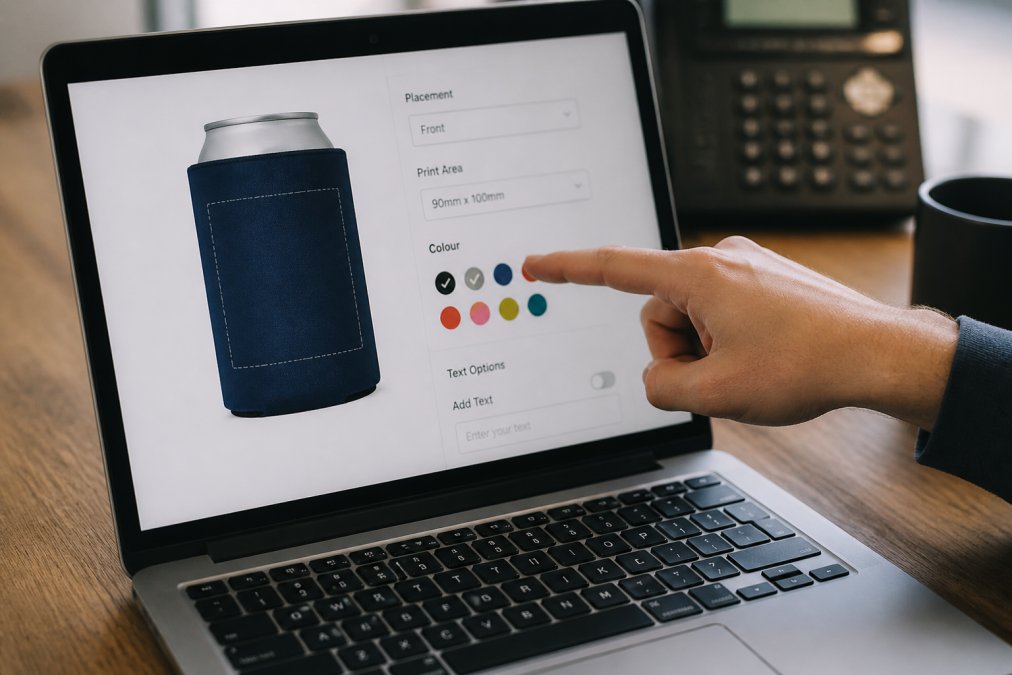
Step 1: Define your design concept. Start by determining what you want your custom stubby holders to feature. Identify your colour scheme, any text or names to include, and whether you're using logos, graphics, or photographs. Sketch your ideas or gather visual references that inspire your design direction.
Step 2: Choose your supplier and confirm specifications. Research suppliers and verify they offer the design options and printing techniques you need. Confirm lead times, pricing, and minimum order quantities. At 123t Australia, we provide transparent information about all these factors upfront so you can make informed decisions.
Step 3: Provide your design or brief. Submit your design files or describe what you want created. If you don't have design files, many suppliers offer design services where their team creates your design based on your requirements. Provide high-resolution images, specific colour codes, and detailed text instructions.
Step 4: Review the design proof. Your supplier will provide a digital proof showing how your design will appear on the finished holder. Review this carefully for colour accuracy, text placement, and overall appearance. Request revisions if anything needs adjustment. This is your opportunity to catch issues before production begins.
Step 5: Approve and confirm production. Once you're satisfied with the proof, formally approve it to proceed with production. Confirm your final order quantity, delivery address, and any special requirements. This approval triggers production scheduling.
Step 6: Arrange payment. Complete payment according to your supplier's terms. For bulk orders, this might involve a deposit to secure your production slot and final payment before shipping. Clarify payment methods and timelines to avoid delays.
Step 7: Track production and delivery. Most suppliers provide production updates and shipping notifications. Track your order through production and confirm delivery details. Upon arrival, inspect your holders for quality before accepting the shipment.
Common Mistakes to Avoid When Designing Stubby Holders
One frequent mistake is designing without considering the cylindrical format. A design that looks perfect on a flat mockup can appear distorted or unbalanced when wrapped around a can. Always request to see how your design will look on the actual holder format before approving production.
Choosing too many colours creates unnecessary complexity and cost. Screen printing becomes impractical with more than 4-5 colours, and full-colour printing, whilst capable of handling unlimited colours, may not deliver the crisp, bold results that make stubby holders visually striking. Simpler designs with 2-4 well-chosen colours often have greater impact than overly complex alternatives.
Placing text too close to edges or seams causes readability issues. Text that wraps awkwardly around the holder's seams becomes difficult to read. Leave adequate margins and position critical text in the centre of the design where it's clearly visible from any angle.
Underestimating the importance of colour contrast creates designs that look muddy or unclear in person. A design that's readable on a bright computer screen might be illegible when printed on the actual holder, particularly in outdoor lighting. Test your colour choices for adequate contrast and visibility.
Ordering insufficient quantity for your actual needs creates frustration. Calculate your guest count or recipient list carefully and add a reasonable buffer. Running short on custom holders for your event is far worse than having a few extras.
Rushing the design approval process leads to mistakes that could have been caught. Take time to review design proofs thoroughly. Requesting revisions before production is simple; fixing problems after production is expensive or impossible.
Ignoring lead times and ordering too close to your event date creates stress and forces rush order premiums. Plan ahead and place orders with comfortable lead times that allow for design revisions and production without panic.
Assuming all suppliers deliver equivalent quality leads to disappointment. Checking customer reviews, requesting samples, and verifying quality standards ensures you're working with a supplier whose standards match your expectations.
Conclusion: Getting Your Custom Stubby Holders Right
Custom stubby holders represent the intersection of practical functionality and memorable branding. Whether you're planning a wedding, celebrating a milestone birthday, building corporate brand presence, or simply creating a unique gift, custom holders deliver genuine value that generic merchandise cannot match. The key to success lies in thoughtful design, quality materials, and working with suppliers who understand the importance of getting details right.
123t Australia specialises in creating high-quality, in-house designed custom stubby holders that combine durable neoprene construction, vibrant full-colour printing, and designs that genuinely reflect your vision. Our 60-day return policy ensures you're protected, and our commitment to quality means your holders will perform beautifully and last for years. Get started with 123t Australia today and create custom stubby holders that your guests, employees, or gift recipients will actually use and treasure.
Frequently Asked Questions
How long does it take to receive custom stubby holders after ordering?
Turnaround times vary depending on order size and printing method. Standard orders typically take 5-10 business days, while rush options are available for orders needed within 1-2 weeks. Always check the estimated delivery date at checkout. For last minute gift ideas, confirm availability before placing your order to avoid disappointment.
What materials are best for long-lasting stubby holders?
Neoprene is the gold standard for custom stubby holders. It's durable, flexible, and provides excellent insulation to keep drinks cold. Look for 6mm thick neoprene with reinforced stitching and quality printing that resists fading. Australian-made options often use premium neoprene that withstands repeated use and washing without degrading.
Can I order custom stubby holders in small quantities?
Yes. Most suppliers, including 123t Australia, offer single-unit purchases starting from $12.95, making them perfect for individual gifts or small batches. However, bulk custom stubby holders often qualify for discounted pricing when ordering 10+ units. Check with your supplier for tiered pricing on larger orders to maximise savings.
What are the benefits of choosing Australian-made stubby holders?
Australian-made stubby holders support local businesses and typically feature stricter quality control. They're produced with local materials and craftsmanship, reducing environmental impact from shipping. Many Australian manufacturers offer faster turnaround times, personalised service, and a 60-day return policy, giving you confidence in your purchase.
How do I design my own stubby holder for an event?
Start with your design concept: logo, text, colours, and imagery. Most suppliers provide design templates or accept custom artwork in standard formats. Submit your design for a proof review before printing. For stubby holder design tips, keep text large and readable, use high-contrast colours, and test how your design wraps around the cylindrical shape.
What printing techniques work best for custom stubby holders?
Full-colour printing delivers vibrant, photo-quality designs ideal for complex artwork or gradients. Screen printing is cost-effective for bulk orders with simple designs and solid colours. Sublimation offers durability and detail. Choose based on your design complexity, budget, and order volume. Ask your supplier which method suits your specific design best.
Will the print fade after washing or use?
Quality matters. Premium suppliers use fade-resistant inks and proper curing processes. Neoprene stubby holders with full-colour or screen-printed designs should maintain colour through hundreds of washes when cared for properly. Avoid excessive heat and harsh chemicals. A 60-day return policy gives you recourse if fading occurs prematurely.
This article was written using GrandRanker

